An Investigation of Saltwater Intrusion in the Changing Coastal Environment of Delaware
This page is dedicated to the previous research studies of Project WiCCED
Project WiCCED (Water in the Changig Coastal Environment of Delaware) 2018-2024.
WiCCED is a multi-institution project in partnership with National Science Foundation and the State of Delaware aimed at assessing major threats to Delaware’s water quality, and developing viable technological and policy solutions for meeting the challenges imposed by them.
Improving Water Security
Improving water security is fundamentally about making better decisions, based on clear scientific understanding.
This research project brings together people across many disciplines — creating real solutions that will have a positive impact on our state and its citizens.
How Our Team is Working to Improve Water Security
Our Partners
This multi-institution project aims to assess major threats to Delaware’s water quality and develop viable technological and policy solutions for meeting the challenges imposed by them.
The University of Delaware is a major research university is dedicated to outstanding graduate, undergraduate and professional education.
Delaware State University places a strong emphasis on research, constantly seeking answers to life’s questions.
Del Tech provides faculty professional development, undergraduate research internships, STEM programs for K–12 students, and support for mapping Delaware’s STEM career pipeline.
Water in the Changing Coastal Environment of Delaware
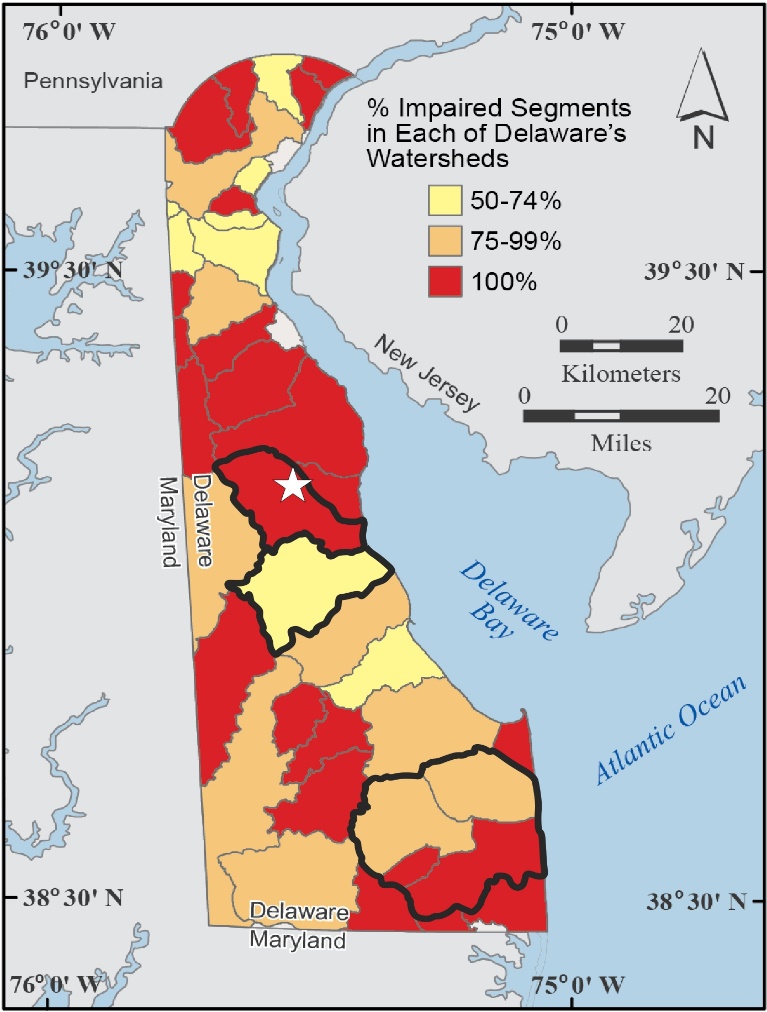
Delaware’s impaired watersheds. Study watersheds are outlined in black. From north to south: St. Jones River, Murderkill River, and Inland Bays Watersheds. Star indicates Dover.
OVERVIEW
Many coastal regions of the world have entered a critical period when multiple pressures threaten water security, defined as the capacity of society to safeguard adequate, sustainable quantities of high-quality water. In Delaware, threats to water security relate primarily to water quality rather than quantity and arise largely due to human behavior-whether from excess nutrients from agriculture and households, increased salinity due to groundwater pumping and sea-level rise, or degradation of ecological systems from an expanding human footprint. Thus, improving water security is fundamentally about making better decisions, based on clear scientific understanding, reliable methods and models for predicting future outcomes, improved technologies, and evidence-based policies and programs that cost-effectively invoke positive behavioral change. This project aims to assess major threats to Delaware’s water quality and develop viable technological and policy solutions for meeting the challenges imposed by them. Threats to water security negatively affect human health, ecosystem function, and critical economic drivers in Delaware, including agriculture and tourism. Addressing these concerns is a need highlighted in Delaware’s Science and Technology Plan and in Governor John Carney’s priorities. In response to these needs, the partner institutions — the University of Delaware, Delaware State University, Delaware Technical Community College, and Wesley College — propose a jurisdictional network of people, institutions, data, and technologies directed at enhancing water security for human, economic, and ecosystem health. Our educational and training mission will ensure that diverse students are engaged in all aspects of the project in order to develop a workforce capable of addressing water security challenges in Delaware and around the world well into the future.
This collaboration will transform our capacity to engage in cutting-edge research to advance scientific understanding of threats to Delaware’s water security and develop groundbreaking solutions. The project integrates engineering, natural, and social sciences, including the application of advanced data analytics, the development and deployment of new sensor technologies, and the use of new techniques and models to predict the often-coupled behavior of water resources and people. The proposed studies will expand knowledge of how competing water uses and sea-level rise exacerbate salinization of freshwater resources; how excess nutrients and carbon are transported and cycled across the landscape under changing human and hydrologic conditions; and how ecosystems respond to, mitigate, or intensify these water quality threats. This project will also support transformative solutions, such as the design and fabrication of low-cost, energy-efficient technologies to remove excess nitrate and ammonium from surface and groundwater. Behavioral insights from field experiments and randomized controlled trials will provide solid evidence on which to base public policy and programs, thereby transforming our ability to address the true threat to water quality-human behavior. The project also builds three infrastructure cores-sensor technology, the microbiome, and data systems and analytics-that will add critical research capacity to support the project and other investigators, educators, and stakeholders statewide.
INTELLECTUAL MERIT
IMPACTS
The activities of this proposal are specific to Delaware but have broad applications in other coastal areas in the U.S. and around the world. Water security is a universal, overarching concern and a major determinant of human health, political stability, and overall quality of life. Governments, businesses, and nongovernmental organizations have numerous unmet needs associated with analyzing, forecasting, and planning near-term and longer-term responses to water security challenges. The scientific insights, technological solutions, and societal guidance created by this project will be communicated to key stakeholders and the public. New partnerships in areas such as advanced data analytics and the emerging threat of environmental cybersecurity will expand the network’s reach and impact. In addition, education and training opportunities throughout the project will help prepare the next generation of scientists, engineers, and leaders to meet future challenges, contribute to economic growth in the state and the nation, and improve environmental health.
Acknowledging EPSCoR Support
The National Science Foundation (NSF) requires grantees to acknowledge EPSCoR support in every publication (including webpages) of any material based on or developed under this grant.
To acknowledge EPSCoR support under the RII-4 grant, which began in October 2018, please use this text: “This publication (or program) was made possible by the National Science Foundation EPSCoR Grant No. 1757353 and the State of Delaware.”
To acknowledge EPSCoR support under the RII-3 grant, which began in June 2013, please use this text: “This publication (or program) was made possible by the National Science Foundation EPSCoR Grant No. IIA-1301765 and the State of Delaware.”
EPSCoR funding awardees are responsible for assuring that every publication of material (including webpages) based on or developed under this award, except scientific articles or papers appearing in scientific, technical or professional journals, contains the following disclaimer: “Any opinions, findings, and conclusions or recommendations expressed in this material are those of the author(s) and do not necessarily reflect the views of the National Science Foundation.”
NSF support must also be orally acknowledged during all news media interviews, including popular media, such as radio, television, and news magazines.
For more information, see the NSF Grant Policy Manual.
Project WiCCED 2-Pager
Microbiome Core
The Microbiome Core are an enabling core for Project WiCCED. Our goal is to provide expanded access to reproducible micro biome profiling data to researchers and to engage students and the public in citizen science related to the regional micro biome. For the latter, we manage two programs to accomplish these goals: To learn more, visit the Microbome Core Website here.
Accessing Google Team Drive
For Project WiCCED Participants Only. If you do not have access, please email Amy Slocum (als@udel.edu) or Maddi Valinski (mvalinsk@udel.edu) with the account you would like to use for access to the Google Team Drive. You must be logged into your account that is a member of the Project WiCCED Google Group and receives messages from wicced@googlegroups.com to access the files in the Project WiCCED Team Drive.
Direct link: https://drive.google.com/drive/u/0/folders/0AIwquHvfv9xpUk9PVA
Instructions to access manually:
- Visit www.drive.google.com. Log into your account that is a member of the Project WiCCED Google Group (wicced@googlegroups.com)
- Click “Team Drives” on the left side of the page.
- Select “WiCCED Project” as the file folder to open.
Standard Operating Procedures
- Delaware State University
- Delaware Technical Community College
- University of Delaware
- Wesley College
Authorship Protocols
In an effort to assist Project WiCCED team members with authorship considerations, we have developed the helpful list below for authorship protocols:
Diversity Resources
We are committed to providing an inclusive and welcoming environment for all members of our community and we place extreme importance on involving women, minorities, low-income and first-generation college students, and persons with disabilities among our students, faculty, and professional staff. Below are resources to help ensure a culture of diversity and inclusion at all levels:
Websites:
-
ADVANCE Faculty Fellows offer workshops for their colleagues on best practices for faculty hiring committees in searching for inclusive excellence. Workshops were first developed under UD’s ADVANCE PAID grant, based on work done at the University of Michigan and the University of Wisconsin – Madison. Faculty Fellows, along with the ADVANCE leadership team, have modified the workshops to keep them up to date and relevant for specific audiences. Workshops are interactive, based on research, and include a module on implicit bias. Information on Faculty Recruitment:
- University of Delaware Inclusive Excellence website: https://sites.udel.edu/diversity
- University of Delaware Center for Black Culture: https://sites.udel.edu/cbc/
- University of Delaware Black Student Graduate Association: https://sites.udel.edu/bgsa/
- University of Delaware Student Groups Central page to find activities and events surrounding all types of student groups: https://studentcentral.udel.edu
Helpful Documents and Tools
- Diversity Recruitment National Organizations and Events that Involve Diverse Participants
- General Counsel Nursing Mothers in the Workplace University of Delaware
- Harvard diversity_recruitment_resources
- Inclusive Excellence – Inclusive Excellence at the University of Delaware
- Minority recruiting and underrepresented practices
Mentoring Resources
In an interest to help guide mentoring for Project WiCCED, we are providing a number of resources/examples for team members to consider
- National Center for Faculty Development and Diversity – “On-demand access to the mentoring, tools and support you need to be successful in the Academy.” https://www.facultydiversity.org
Note: University of Delaware has a membership that all UD faculty can use. - My Individual Development Plan – A free online tool for postdoctoral scientists, to help define and achieve career goals. Developed by AAAS and partners. https://myidp.sciencecareers.org
- Hanson Lab Statement of Rights
- CEAE Mentoring Guidelines – Example
- AllHandsMentoring_Framework
- Individual Development Plans (IDPs): An Underutilized Advising Tool in the Geosciences
- Individual Development Plans (IDPs), School of Ocean, Earth Science and Technology, University of Hawaii
Presentations:
- Building A Mentorship Network and the Importance of Communucation – Leah Palm-Forster
- From Empirical to Intentional- How I Learned to Mentor – Tom Hanson
- The Reciprocated Mentor-Mentee Relationship & The Art Of Open Dialogue – Antonette Todd
If you have resources to share and include, please email Amy Slocum at als@udel.edu
Team Science
Team Science and Stakeholder Engagement Resources – Silka and Hart June 2019
A. Team Science, Interdisciplinarity, and Collaboration
- Collaboration and Team Science Field Guide: https://www.cancer.gov/about-nci/organization/crs/research-initiatives/team-science-field-guide/collaboration-team-science-guide.pdf
- Team Science Toolkit: https://www.teamsciencetoolkit.cancer.gov/Public/GetStarted.aspx
- Interdisciplinary Research Journeys – Practical Strategies for Capturing Creativity: https://www.bloomsburycollections.com/book/interdisciplinary-research-journeys-practical-strategies-for-capturing-creativity/ [Note: you can download all the chapters for free]
- SciTS and Team Science Resources: https://www.inscits.org/scits-a-team-science-resources
- Toolkit Dialogue Initiative: http://tdi.msu.edu/
- Enhancing the Effectiveness of Team Science, National Academies Report, April 2015: https://www.nap.edu/catalog/19007/enhancing-the-effectiveness-of-team-science
B. Transdisciplinary Research, including Stakeholder Engagement and Co-Production
- Network for Transdisciplinary Research: http://www.transdisciplinarity.ch/en/td-net/Ueber-td-net.html
- Integration and Implementation Science: https://i2s.anu.edu.au/
- Interdisciplinary Integration Research Careers Hub: https://www.intereach.org/
- Doing science differently: Co-producing conservation outcomes: https://luchoffmanninstitute.org/2018/09/doing-science-differently-introducing-co-production/
- Linking knowledge with action for sustainable development: https://www.researchgate.net/publication/228247371_Linking_Knowledge_and_Action_for_Sustainable_Development
C. Connecting all the Dots
- Crafting usable knowledge for sustainable development: https://www.pnas.org/content/113/17/4570
D. Issues and Dilemmas in Stakeholder Researcher Partnerships
Grant Development and Red Team Review Support
In an effort to catalyze new research as a part of Delaware EPSCoR and Project WiCCED, red team reviews and grant development support will be offered to researchers in Delaware engaged with Project WiCCED.
Funding support will be provided for the following activities related to grant development:
- Writing retreats (travel to/from meetings, lunch, etc.)
- Full “red team reviews”
- Copy editing services
- Graphic design services
- Grant writer
Priority will be given to projects that meet at least one of the following criteria:
- Big, interdisciplinary projects
- Bring together researchers from multiple institutions within the project
- Bring together new, multi-disciplinary teams
- Are related to issues surrounding water security in the state of Delaware and further the Project WiCCED and Delaware EPSCoR mission
To apply for funding support, please send Amy Slocum (als@udel.edu) an email with the following information:
- Proposed project title
- Draft abstract of the grant
- Approximate total budget (if awarded)
- Name(s) and affiliations of collaborators
- Name of funding opportunity and link to RFP (if applicable)
- Grant due date
- Type of submission (1st submission, resubmission, letter of intent, etc.)
- Amount of support requested and what these funds will be used for
All efforts will be made to respond to requests for funds within 1 week.
Interested in Project WiCCED?
Thank you for your interest in Project WiCCED. If you’d like more information or interested in joining our team of researchers, please let us know!
We look forward to hearing from you.
|
|
WiCCED News
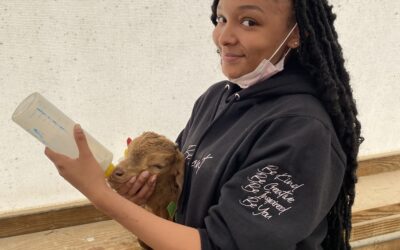
Ayiana James’s Summer Internship Launched Her into Graduate School at UD
Ayiana James was a summer intern for Project WiCCED at UD in 2021. The research and professional development skills she learned in the internship helped James enroll as a master’s student in animal science at UD this fall, with a teaching assistantship that covers her tuition and provides a stipend for living expenses.
Jordan Watson Studies Ocean Acidification at Delaware Inlet, Propelled by Summer Internship with Project WiCCED
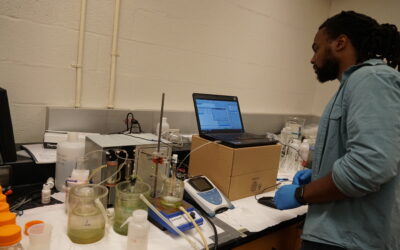
Jordan Watson, a master’s degree student in chemical oceanography at UD, recalls a time during his summer 2021 internship through Project WiCCED when, looking out from Lewes Beach, he saw dolphins crossing in front of the sunset and knew this was finally the right fit for him.
2022 Project WiCCED Newsletter
Check out Project WiCCED in Action November 2022.docx here to learn about what the project has been up to.
Water in the Changing Coastal Environment of Delaware
PROJECT TEAM MEMBERS
Delaware State University
DEL STATE FACULTY
DEL STATE STAFF
DEL STATE GRAD STUDENTS
DEL STATE UNDERGRAD STUDENTS
Wesley College
Wesley College is now part of Delaware State University and the team members listed below were an integral part of the first three years of Project WICCED.
WESLEY COLLEGE - OFFICE OF PROVOST
WESLEY COLLEGE FACULTY
WESLEY COLLEGE STAFF
WESLEY COLLEGE GRAD STUDENTS
WESLEY COLLEGE UNDERGRADS
Delaware Technical Community College
DEL TECH STAFF
DEL TECH UNDERGRADS
University of Delaware
UD FACULTY
UD STAFF
UD GRAD STUDENTS
UD UNDERGRAD STUDENTS
Past Opportunities
Undergraduate Internship Opportunities Academic Year 2022 - 2023
Project WICCED supports paid undergraduate research internships that provides interested students with a sustained environmental research experience during the summer. Scholars work with faculty research mentors at the University of Delaware. Students may select from the projects shown on this page. The broad theme of the opportunities relates to water in our changing coastal environment.
For the Fall 2022, internships will begin on November 1, 2022 through May 12, 2022
University of Delaware undergraduate students from any major may apply. The research project descriptions below specify any coursework or prerequisites for the opportunity. In addition to research, DENIN Scholars are also required to attend workshops in career development and effective communication, as well as occasional field trips or social events. Scholars present the results of their work at a student symposium in May 2023.
All applicants should have a minimum 3.0 GPA and must be current sophomores, juniors, or seniors.
How to Apply:
Students who are interested in applying should review the published opportunities below. You may select a first choice and second choice project. To apply, go to: http://ugresearch.udel.edu/PUB_Program.aspx
Please note that the application requires one letter of recommendation from a faculty member or another person who can comment on your experience, education, and suitability for a DENIN Environmental Scholar research project. The online application system will ask you for the name and email of your reference, and will send a request to that person by email. Please contact your reference in advance, to see if they are able to provide a letter.
Students with questions about the DENIN Scholars program or the application process should contact Dr. Yolanda Williams-Bey at DENIN.
-
Current Funded Projects for Fall 2022 – Spring 2023
University of Delaware
- Dissolved organic matter in the Indian River and Rehoboth Bays (Threat 3)
- Economic experiments to assess the impacts of environmental risk information (S1-Behavior)
- The Delaware Microbiome Project – regional microbial communities across space and time (Microbiome)
- Visualizing and Analyzing Microbiome Data in Regional Context and Scale (Data Core-Microbiome)
Undergraduate Internship Opportunities Summer 2022
Project WICCED supports paid undergraduate research internships that provides interested students with a sustained environmental research experience during the summer. Scholars work with faculty research mentors at the University of Delaware. Students may select from the projects shown on this page. The broad theme of the opportunities relates to water in our changing coastal environment.
For the Summer 2022 internships will begin on June 6 through August 12, 2022. Students make a full-time commitment to work on a project during the summer.
University of Delaware undergraduate students from any major may apply. The research project descriptions below specify any coursework or prerequisites for the opportunity. In addition to research, the scholars are also required to attend workshops in career development and effective communication, as well as occasional field trips or social events. Scholars present the results of their work at a student symposium in August 2022.
All applicants should have a minimum 3.0 GPA and must be current sophomores, juniors, or seniors.
How to Apply:
Students who are interested in applying should review the published opportunities below. You may select a first choice and second choice project. To apply, go to: http://ugresearch.udel.edu/PUB_Program.aspx
Please note that the application requires one letter of recommendation from a faculty member or another person who can comment on your experience, education, and suitability for a DENIN Environmental Scholar research project. The online application system will ask you for the name and email of your reference, and will send a request to that person by email. Please contact your reference in advance, to see if they are able to provide a letter.
Students with questions about the DENIN Scholars program or the application process should contact Dr. Yolanda Williams-Bey at DENIN.
Current Projects for Summer 2022
- Advancing-pH-measurement-technologies-for-coastal-ocean-acidification-monitoring-in-the-Delaware-Estuary-and-Delawares-Inland-Bays-Threat-3
- An Assessment of Larval Oyster Recruitment in Delaware_Threat4
- CEMA-Climate-Data-Update-and-Information-Outreach-Data-Core-8
- Delaware Inland Bays Science and Restoration Internship – Threat 3 2021
- Economic experiments to assess the impacts of environmental risk information – Social Dimensions
- Homeowner Valuation of Information about Septic System Condition-Social Dimensions
- Salinization of the Coastal Critical Zone- Drivers and feedbacks that transform landscapes and fluxes between land and sea (Threat 1)
- Sea-Level-Rise-Induced Release of Arsenic from Flood-Prone Contaminated Coastal Sediments – Threat 2
- The Delaware Microbiome Project – regional microbial communities across space and time – Microbiome Core
Undergraduate Internship Opportunities Academic Year 2021 - 2022
Project WICCED supports paid undergraduate research internships that provides interested students with a sustained environmental research experience during the summer. Scholars work with faculty research mentors at the University of Delaware. Students may select from the projects shown on this page. The broad theme of the opportunities relates to water in our changing coastal environment.
For the Fall 2020, internships will begin on November 1, 2021 through May 15, 2022
University of Delaware undergraduate students from any major may apply. The research project descriptions below specify any coursework or prerequisites for the opportunity. In addition to research, DENIN Scholars are also required to attend workshops in career development and effective communication, as well as occasional field trips or social events. Scholars present the results of their work at a student symposium in May 2021.
All applicants should have a minimum 3.0 GPA and must be current sophomores, juniors, or seniors.
How to Apply:
Students who are interested in applying should review the published opportunities below. You may select a first choice and second choice project. To apply, go to: http://ugresearch.udel.edu/PUB_Program.aspx
Please note that the application requires one letter of recommendation from a faculty member or another person who can comment on your experience, education, and suitability for a DENIN Environmental Scholar research project. The online application system will ask you for the name and email of your reference, and will send a request to that person by email. Please contact your reference in advance, to see if they are able to provide a letter.
Students with questions about the DENIN Scholars program or the application process should contact Dr. Yolanda Williams-Bey at DENIN.
-
Current Funded Projects for Fall 2021 – Spring 2022
University of Delaware
- Advancing pH measurement technologies for coastal ocean acidification monitoring in the Delaware Estuary and Delaware’s Inland Bays (Threat 3)
- CEMA Climate Data Update and Information Outreach (Data Core)
- Climate change adaptation- economic mechanisms to increase efficiency of coastal property buyouts (Social Dimensions)
- Sea-Level-Rise-Induced Release of Arsenic from Flood-Prone Contaminated Coastal Sediments (Threat 2)
- The impacts of increasing seawater level rise on phosphorus biogeochemistry in coastal soils (Threat 2)
Undergraduate Internship Opportunities Summer 2021
Project WICCED supports paid undergraduate research internships that provides interested students with a sustained environmental research experience during the summer. Scholars work with faculty research mentors at the University of Delaware. Students may select from the projects shown on this page. The broad theme of the opportunities relates to water in our changing coastal environment.
For the Summer 2021 internships will begin on June 7 through August 13, 2021. Students make a full-time commitment to work on a project during the summer.
University of Delaware undergraduate students from any major may apply. The research project descriptions below specify any coursework or prerequisites for the opportunity. In addition to research, the scholars are also required to attend workshops in career development and effective communication, as well as occasional field trips or social events. Scholars present the results of their work at a student symposium in August 2021.
All applicants should have a minimum 3.0 GPA and must be current sophomores, juniors, or seniors.
How to Apply:
Students who are interested in applying should review the published opportunities below. You may select a first choice and second choice project. To apply, go to: http://ugresearch.udel.edu/PUB_Program.aspx
Please note that the application requires one letter of recommendation from a faculty member or another person who can comment on your experience, education, and suitability for a DENIN Environmental Scholar research project. The online application system will ask you for the name and email of your reference, and will send a request to that person by email. Please contact your reference in advance, to see if they are able to provide a letter.
Students with questions about the DENIN Scholars program or the application process should contact Dr. Yolanda Williams-Bey at DENIN.
-
Current Funded Projects for Summer 2021
University of Delaware
- Advancing measurement of estuarine and coastal ocean acidification (Threat 3)
- Assessing bio-and photo-degradation effects on fluorescent dissolved organic matter signals in the Murderkill estuary (Threat 3)
- Developing modeling tool to study human behavior and water system (Social Dimensions_DataCore)
- Drivers of Farmers’ Persistence with Cover Cropping (Social Dimensions)
- Economic mechanisms to increase efficiency of coastal property buyouts (Social Dimensions)
- Environmental controls on the vulnerability of coastal aquifers to storm-surge salinization (Threat 1)
- Homeowner Valuation of Information about Septic System Condition (Social Dimensions)
- Phosphorus cycling in the Murderkill River (Threat 2)
Wesley College
Undergraduate Internship Opportunities Academic Year 2020 -2021
(For the original posting, visit: http://www.denin.udel.edu/students-page/denin-environmental-scholars/)
The DENIN Environmental Scholars Program is a paid undergraduate research internship that provides interested students with a sustained environmental research experience during the academic year. Scholars work with faculty research mentors at the University of Delaware. Students may select from the projects shown on this page. The broad theme of the opportunities relates to water in our changing coastal environment.
For the Fall 2020, internships will begin on November 1, 2020 through May 15, 2021
University of Delaware undergraduate students from any major may apply. The research project descriptions below specify any coursework or prerequisites for the opportunity. In addition to research, DENIN Scholars are also required to attend workshops in career development and effective communication, as well as occasional field trips or social events. Scholars present the results of their work at a student symposium in May 2021.
All applicants should have a minimum 3.0 GPA and must be current sophomores, juniors, or seniors.
How to Apply:
Students who are interested in applying should review the published opportunities below. You may select a first choice and second choice project. To apply, go to: http://ugresearch.udel.edu/PUB_Program.aspx
Please note that the application requires one letter of recommendation from a faculty member or another person who can comment on your experience, education, and suitability for a DENIN Environmental Scholar research project. The online application system will ask you for the name and email of your reference, and will send a request to that person by email. Please contact your reference in advance, to see if they are able to provide a letter.
Students with questions about the DENIN Scholars program or the application process should contact Dr. Yolanda Williams-Bey at DENIN.
Current Funded Projects for Fall 2020 – Spring 2021.
University of Delaware
- CEMA Climate Data Update and Information Outreach (Data Core)
- Climate Change Adaptation- Economic Mechanisms to Increase Efficiency of Coastal Property Buyouts (S1 Behavior)
- Kinetics of naturally formed manganese-oxides in a changing climate (Threat 2)
- Persistence with Cover Cropping- A Remote Sensing Investigation of Delaware Farmers (Social Dimensions)
- Understanding the distribution of cyanobacteria in Delaware ponds (MicrobiomeCore)
Undergraduate Internship Opportunities Summer 2020
(For the original posting, visit: http://www.denin.udel.edu/students-page/denin-environmental-scholars/)
The DENIN Environmental Scholars Program is a paid undergraduate research internship that provides interested students with a sustained environmental research experience during the academic year. Scholars work with faculty research mentors at the University of Delaware. Students may select from the projects shown on this page. The broad theme of the opportunities relates to water in our changing coastal environment.
For the Summer 2020, internships will begin on May 2020 through August 2020. Students make a full-time commitment to work on a project during the summer.
University of Delaware undergraduate students from any major may apply. The research project descriptions below specify any coursework or prerequisites for the opportunity. In addition to research, DENIN Scholars are also required to attend workshops in career development and effective communication, as well as occasional field trips or social events. Scholars present the results of their work at a student symposium in August 2020.
All applicants should have a minimum 3.0 GPA and must be current sophomores, juniors, or seniors.
How to Apply:
Students who are interested in applying should review the published opportunities below. You may select a first choice and second choice project. To apply, go to: http://ugresearch.udel.edu/PUB_Program.aspx
Please note that the application requires one letter of recommendation from a faculty member or another person who can comment on your experience, education, and suitability for a DENIN Environmental Scholar research project. The online application system will ask you for the name and email of your reference, and will send a request to that person by email. Please contact your reference in advance, to see if they are able to provide a letter.
Students with questions about the DENIN Scholars program or the application process should contact Dr. Yolanda Williams-Bey at DENIN. Applications are due April 1, 2020.
Current Funded Projects for Summer 2020
University of Delaware
- Data Retrieval and Analysis for Understanding Societal Responses to Global Environmental Change (Data Core)
- Deciphering_satellite_images (Data Core)
- Encouraging Participation in Citizen Science for Coastal Water Data Collection (Social Dimensions)
- Farmers’ Persistence with Agricultural Practices (Social Dimensions)
- Homeowner Uptake of Coastal Buyouts (Social Dimensions)
- Homeowners’ willingness-to-pay for stormwater best management practices in Delaware (Social Dimensions)
- Homeowner Valuation of Information about Septic System Condition (Social Dimensions)
- Interactive Mapping of Geospatial Data (Data Core)Deciphering_satellite_images (Data Core)
- The chemistry of legacy phosphorus in US Mid-Atlantic agricultural soils (Threat 2)
- The Effect of Groundwater Pumping on the Salinization of Coastal Streams (Threat 1)
Wesley College
- Dendroecology- Exploring changes in Delaware’s coastal forrest using dendroecology (Threat 4)
- Evaluation of the COVID-19 Impacts on Wesley’s STEM Undergraduate Population (Solution 3 – EOD)
- Geographic Information System Education for Spatial Analysis of Delaware Based Research Questions (Threat 4)
- Identification of Potential Metabolic Pathways in Environmental Isolates (Microbiome Core)
Postdoc in Experimental Economics
Position Description
The Center for Experimental & Applied Economics (CEAE) at the University of Delaware seeks a qualified candidate to serve as a postdoc researcher for 2-3 years with the opportunity for renewal thereafter. The successful candidate will focus on applying experimental and behavioral economics to agri-environmental issues and coastal water issues, such as the reduction of non-point source pollution, environmental and food risks, and conducting randomized controlled trials on voluntary conservation programs. This position and related research is supported from funds from the National Science Foundation and the United States Department of Agriculture.
Opportunities:
The successful candidate will have the opportunity to co-author several publications and participate in professional conferences. This position also involves opportunities to work on research with graduate and undergraduate students. The successful candidate will work with Dr. Kent Messer, CEAE Director and Dr. Leah Palm-Forster CEAE Associate Director.
The University of Delaware is the co-headquarters for the Center for Experimental & Behavioral Agri-Environmental Research (CBEAR), a USDA Center of Excellence. We are also related to the new NSF-EPSCoR project in Delaware entitled, “Water in the Changing Coastal Environment of Delaware” (Project WiCCED). The position will offer a competitive salary that is commensurate with qualifications and experience. An attractive fringe benefit package is included.
Qualifications:
Applicants are expected to have strong training and experience in experimental and behavioral economics and its application to agricultural and/or environmental issues. A PhD in economics or applied economics (or closely related field) with an emphasis on environmental, agricultural, and resource issues is preferred. Applicants without a PhD, but have significant experience with experimental economics research, may also be considered. Experience with writing grant proposals is welcomed.
Application:
Submit via email a letter of application, vita, a personal statement, university transcripts (unofficial transcripts are sufficient), and the names of three references to Maddi Valinski, CEAE Lab Manager (mvalinsk@udel.edu).
Anticipated Start Date: July 1, 2019 (negotiable). Review of applications will begin on March 8, 2019, and will continue until an acceptable candidate is identified.
Undergraduate Internship Opportunities Academic Year 2019 - 2020
(For the original posting, visit: http://www.denin.udel.edu/students-page/denin-environmental-scholars/)
The DENIN Environmental Scholars Program is a paid undergraduate research internship that provides interested students with a sustained environmental research experience during the academic year. Scholars work with faculty research mentors at the University of Delaware. Students may select from the projects shown on this page. The broad theme of the opportunities relates to water in our changing coastal environment.
For the 2019-2020 Academic year, internships will begin on November 1, 2019 and end on May 07, 2020. Students make a full-time commitment to work on a project during Winter Session 2020, and work part-time during Fall Semester 2019 and Spring Semester 2020.
University of Delaware undergraduate students from any major may apply. The research project descriptions below specify any coursework or prerequisites for the opportunity. In addition to research, DENIN Scholars are also required to attend workshops in career development and effective communication, as well as occasional field trips or social events. Scholars present the results of their work at a student symposium in May 2019.
All applicants should have a minimum 3.0 GPA and must be current sophomores, juniors, or seniors.
How to Apply:
Students who are interested in applying should review the published opportunities below. You may select a first choice and second choice project. To apply, go to: http://ugresearch.udel.edu/PUB_Program.aspx
Please note that the application requires one letter of recommendation from a faculty member or another person who can comment on your experience, education, and suitability for a DENIN Environmental Scholar research project. The online application system will ask you for the name and email of your reference, and will send a request to that person by email. Please contact your reference in advance, to see if they are able to provide a letter.
Students with questions about the DENIN Scholars program or the application process should contact Dr. Yolanda Williams-Bey at DENIN. Applications are due October 9, 2019.
Current Funded Projects for Academic Year 2019-2020
Wesley College
University of Delaware
- Continued participation in citizen science (Social Dimensions)
- Coupled iron-carbon chemistry in a warming permafrost environment (Threat 2)
- Cover crop persistence by Delaware farmers A GIS investigation (Social Dimensions)
- Data Retrieval and Analysis for Understanding Human Perceptions of Global Environmental Change (Data Core)
- Data Retrieval and Analysis for Understanding Water Quantity and Quality across the Continental U.S. (Data Core)
- Defining microbial community structure and function in Delaware River waters (Microbiome Core)
- Examining the adoption of oyster farming in Delaware (Solution 2- Policy & Markets_Social Dimensions)
- Experimental economics study of groundwater management (Social Dimensions)
- Homeowners’ willingness-to-pay for stormwater best management practices in Delaware (Social Dimensions)
- Randomized controlled trial related to recruiting diverse students (Social Dimensions)
- Sea level rise impacts on redox active element mobility in natural systems (Threat 2)
- The chemistry of legacy phosphorus in US Mid-Atlantic agricultural soils (Threat 2)
EPSCoR Project WICCED Summer Scholars Program
The EPSCoR Project WiCCED Summer Scholars program takes place over a 10-week period beginning in May/June and culminating in August with the presentation of research results at an undergraduate research symposium. In addition to completing an independent research project under the guidance of a faculty mentor, interns participate in skill-building seminars on such topics as choosing a graduate school, research ethics, and making research presentations and posters. Summer Scholars typically receive a stipend of $4,000.
The research project descriptions below specify any coursework or prerequisites for the opportunity. In addition to research, EPSCoR Project WiCCED Summer Scholars are also required to attend workshops in career development and effective communication, as well as occasional field trips or social events. Scholars present the results of their work at a student symposium in August 2019.
Application Deadline: March 15, 2019
How to Apply:
Students who are interested in applying should review the published opportunities below. You may select a first choice and second choice project. To apply, go to: http://ugresearch.udel.edu/PUB_Program.aspx
Please note that the application requires one letter of recommendation from a faculty member or another person who can comment on your experience, education, and suitability for an EPSCoR Project WiCCED Summer Scholars research project. The online application system will ask you for the name and email of your references, and will send a request to that person by email. Please contact your references in advance, to see if they are able to provide a letter.
Students with questions about the EPSCoR Project WiCCED Summer Scholars program or the application process should contact Dr. Yolanda Williams-Bey at DENIN.
2019 EPSCoR Project WiCCED Summer Scholars Project Descriptions
Delaware State University
University of Delaware
- A Smart, Piezoelectric Sensor for Detecting Toxins in the Environment (Sensor Core)
- Defining Microbial Community Structure and Function in Delaware River Waters (Microbiome Core)
- Enhancing Farmers’ Adoption of Decision Support Tools to Improve Irrigation Management in Delaware (Social Dimensions)
- Experimental Economics Study of Groundwater Management (Social Dimensions)
- Iron Mineral Transformation and Chromium Sequestration in Oxygen-Limited Soil (Threat 2)
- Social Networks and Oyster Consumption (Social Dimensions)
- The Chemistry of Legacy Phosphorus in US Mid-Atlantic Agricultural Soils (Threat 2)
- Understanding the Distribution of Cyanobacteria in Delaware Ponds
Wesley College
EPSCoR Project WICCED High School Program - William Penn Scholars - July 8-August 16, 2019
In summer 2019, there will be opportunities for six William Penn High School students to have paid research opportunities at the University of Delaware. The opportunities are broadly related to the environment, and include computer science, microbiology and soil science. The opportunities are designed to build skills and experience, earn credit toward graduation, and meet others interested in science and technology. The internships are organized by the Delaware Environmental Institute at the University of Delaware.
The dates of the internships are July 8 to August 16, 2019.
More information on each opportunity is provided below. Students apply online https://ugresearch.udel.edu/PUB_Program.aspx, and are selected through a competitive application process. To access information, and to apply, go to: https://projectwicced.org/opportunities/
The internships are part of a larger scientific research project in Delaware, supported by the National Science Foundation (NSF). NSF is a federal agency that funds high-quality science and engineering of importance to society. The Delaware project is a partnership among the University of Delaware, Delaware State University, Delaware Technical Community College, and Wesley College. The scientific focus, and the name of the project is, “Water in the changing coastal environment of Delaware” (nicknamed Project WiCCED) The overall project will assess threats and develop solutions around the human and natural pressures threatening water security in Delaware’s changing coastal environment. A major focus of project WiCCED is to monitor nutrient pollution and water quality.
High School students interested in participating in summer research can apply for one of three opportunities.
Opportunity 1, Computer Science
Faculty Member: Andrew Novocin
Data Core: The data core will support project WiCCED by developing a platform for storage and dissemination of data produced by project WiCCED and will develop data analysis techniques and data-backed decision support systems.
Techniques and skills: Learn about computer systems, coding languages and teamworking skills.
Opportunity 2, Microbiology
Faculty Member: Thomas Hanson
Microbiome Core: The microbiome core will support Project WiCCED by establishing high quality genetic information about microbial species found in water and surrounding environments to determine how microbiome profiles are affected by salinity and nutrients. Microbes are critical players in pollution and chemical cycling. Specific information about the presence and absence of specific genes related to nitrogen, sulfur, carbon and phosphorus cycling will be analyzed.
Techniques and skills: Determine the genetic and physical profile of microorganisms, sterile technique, media preparation, culture maintenance, and potential for web based bioinformatic programs
Opportunity 3, Soil Science
Faculty Member: Donald Sparks
Threat 2; Salinity-associated Nutrient Mobilization and Cycling: Threat 2 will support project WiCCED by studying how the salinity of newly flooded coastal soils and sediments alters nutrient cycling. Salinization degrades water quality and alters the fundamental physiochemical nature of the soil-water environment. These changes negatively affect the health and functioning of wetland biota and often result in shifts in the structure of the wetland community and alters the ability of a wetland to provide key ecosystem services.
Techniques and skills: Analyze soil materials, pipetting skills, sterile techniques and media preparation.
General skills that most students will learn in conjunction with the specific skills learned in each individual opportunity.
- How to keep a note book
- Learn how university laboratories operate
- Work alongside undergraduate, graduate and professional scientists
Web Applications Developer Intern
Position Title: Web Applications Developer Intern
Location: 102A Pearson Hall, University of Delaware (Remote Working Option Available)
Deadline to Apply: April 1, 2019
The University of Delaware’s Center for Environmental Monitoring and Analysis (CEMA) seeks a
talented student intern interested in creating web applications using environmental sensor data and
information. This position will be a miscellaneous wage position, with compensation commensurate
with experience and qualifications. The intended duration of this internship is June 1, 2019 through
August 31, 2019.
Job Duties:
- Design, develop, and maintain web applications for environmental data websites.
- Develop testing routines for existing and future web applications. Troubleshoot and correct
problems encountered during testing. - Ensure the security and integrity of the application(s) and application data.
- Write and prepare software documentation.
Qualifications:
- Working knowledge of fundamental computer science concepts
- Experience developing applications in HTML, CSS, Javascript, and PHP
- Experience writing and utilizing RESTful API services
- Proficiency in unit testing
- Excellent verbal and written skills
- Ability to work collaboratively in a team environment and effectively with people of varying
computational backgrounds - Strong analytical and problem-solving skills
- Willingness to learn and understand the application of environmental data and information in
applications
Preferred Qualifications:
- Experience with mobile application development (iOS and Android)
- Experience with JSON and other data exchange formats
- Knowledge of SQL for accessing data in databases
To apply, please send resumes with a cover letter to:
Kevin Brinson
Director of DEOS
Center for Environmental Monitoring and Analysis
Email: kbrinson@udel.edu
Phone: 302.831.6906
Environmental Summer Internship Opportunities
Summer Internships are available through a variety of local and regional partners in Delaware.
- Delaware State Park Internships
- Delaware Wild Lands Internship
- Delaware Water Resources Center
- Delaware River Basin Commission Internships
Resources to find internships and jobs in the area related to water:
Contact Us
(302) 831-4335
221 Academy Street | Harker ISE Lab, Suite 250 | Newark, DE
Join Our Team of Researchers
Big challenges require ‘WiCCED’ solutions. Our collaborations allow us to take on some of the most challenging problems. Come be a part of something special.